Knowing is not doing
A reminder can help me remember, but switching focus and actually starting are separate barriers.
 Iron Squire
Closed testing
Now Help me test Iron Squire
I have reached the point where testing it alone is not enough. If you would like to try Iron Squire on Android, join the Google Group first. The Play testing link is shared inside the group.
The Google Group link will appear here once it is ready.
Use the button on this page to become an approved tester.
Google Play can take a little time to recognise a new group member.
Find the Play link inside the group, opt in, and install Iron Squire.
01 A personal Android project
This project comes from autistic lived experience and a problem I know well: wanting to do something is not always the same as being able to start it. I’m building Iron Squire to help with medication reminders, daily routines, and the friction of starting tasks without making a hard day feel like a personal failure.
Built from autistic lived experience
As an autistic person, I know I can care about taking my medication, eating, showering, or getting ready for an appointment and still feel completely stuck at the starting line.
Iron Squire came from wanting support for that gap: the awkward space between knowing something matters and being able to begin it. It is a routine and reminder app shaped by autistic lived experience, for autistic adults and anyone who recognises that friction.
A reminder can help me remember, but switching focus and actually starting are separate barriers.
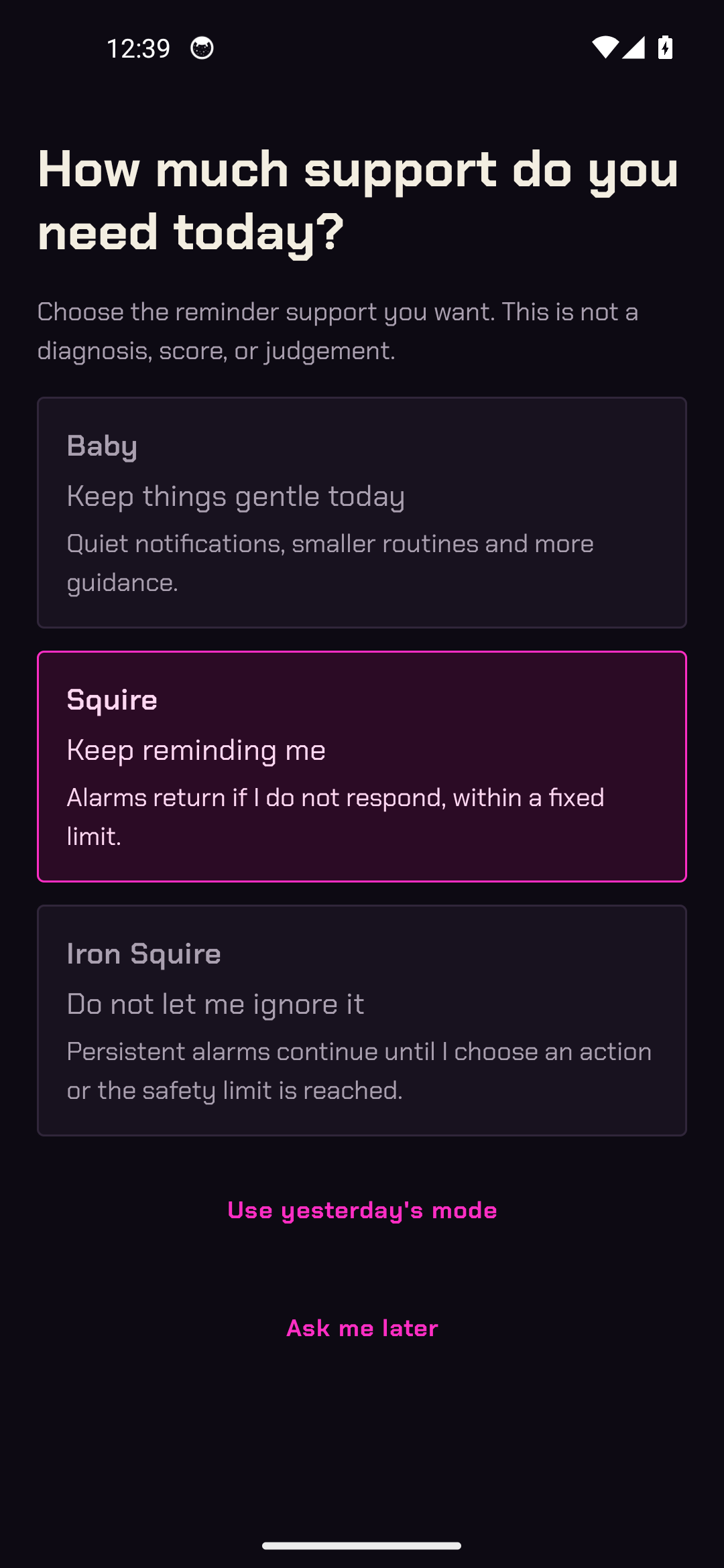
Some days I need one gentle nudge. Other days I need the reminder to keep coming back.
Pausing, doing the minimum, or returning later should count as care, not as failure.
What I wish a reminder could do
I’m not trying to turn daily life into a score or pretend one system works for everyone. The idea is simpler: make the important thing clear, offer a manageable next action when executive function feels stretched, and let the level of support change with the day.
Medication support
Instead of disappearing into the notification tray, the reminder stays clear until I can mark it taken or ask for more time. It does not make medical decisions; it supports the routine around them.
Follow the instructions saved with this medication.
Daily support modes
Sometimes one notification is enough. Sometimes I need it to come back. Choosing stronger support is not a bad score; it is just being honest about the day I’m having.
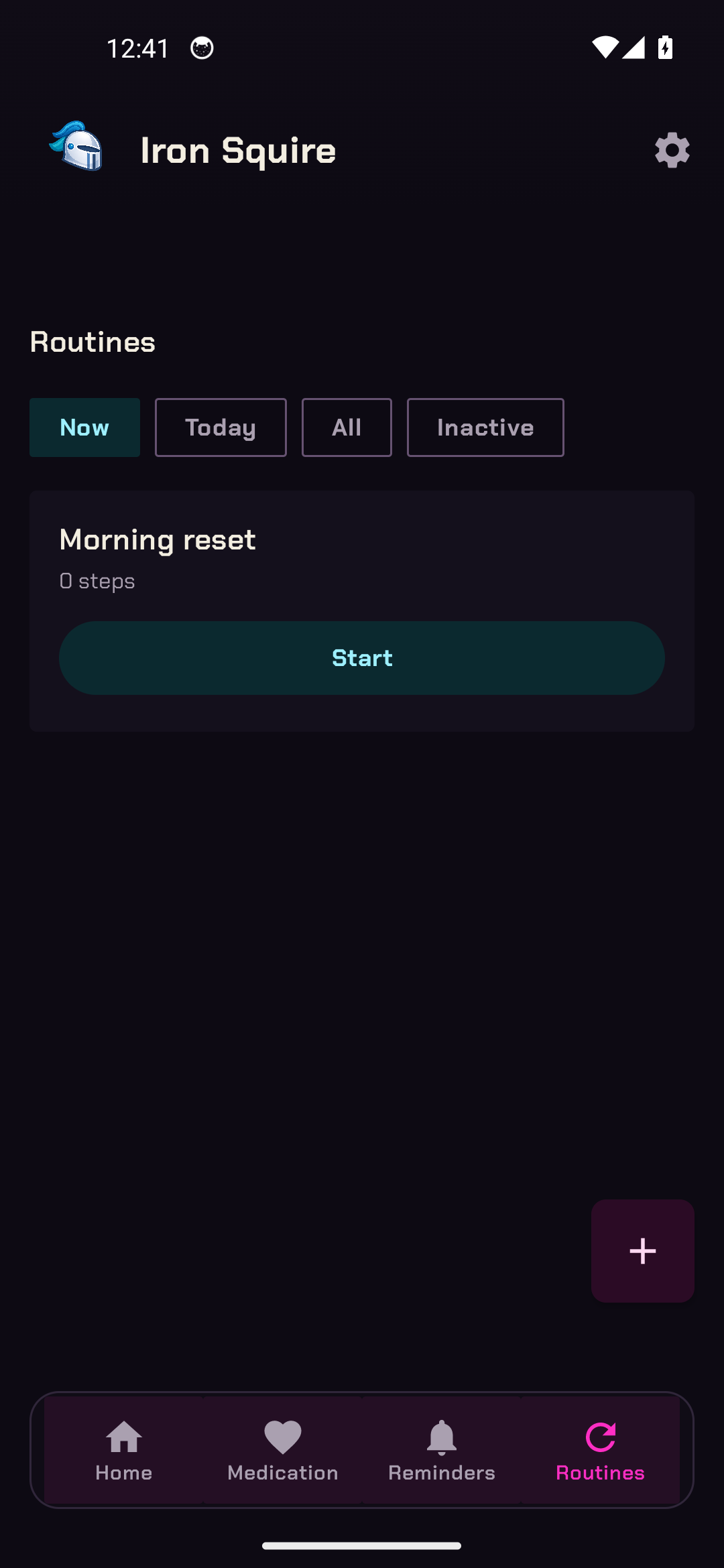
Resumable routines
Pause here. Come back without losing your place.
Persistent, not punishing
The point is not to make the loudest or most stressful alarm possible. It is to keep an important task from disappearing while still respecting panic, sensory overload, and the need to pause.
Doing less still counts
On a difficult day, I do not need another red screen telling me I failed. I need permission to stop, keep my place, and use the smallest version of the routine that still helps.
Why the tone matters
“I do not want software to punish people for having a difficult day. It should meet them where they are and help with the next possible step.”
Bruno · Why I’m building Iron Squire
My intention for the project
If I release Iron Squire, I want the core tools, including medication reminders, support modes, routines, and accessibility controls, to be available without a subscription.
The plan is for an optional paid version to remove unobtrusive advertising and support continued development. It would not unlock essential help that free users cannot access.
05 A personal project I want to share
I am not building Iron Squire because I think one app can solve a complicated problem or speak for everyone. I’m building it because I know how frustrating it is to care, know what needs doing, and still be unable to begin. If it can make those moments a little easier for someone else, it is worth sharing.